 benchr
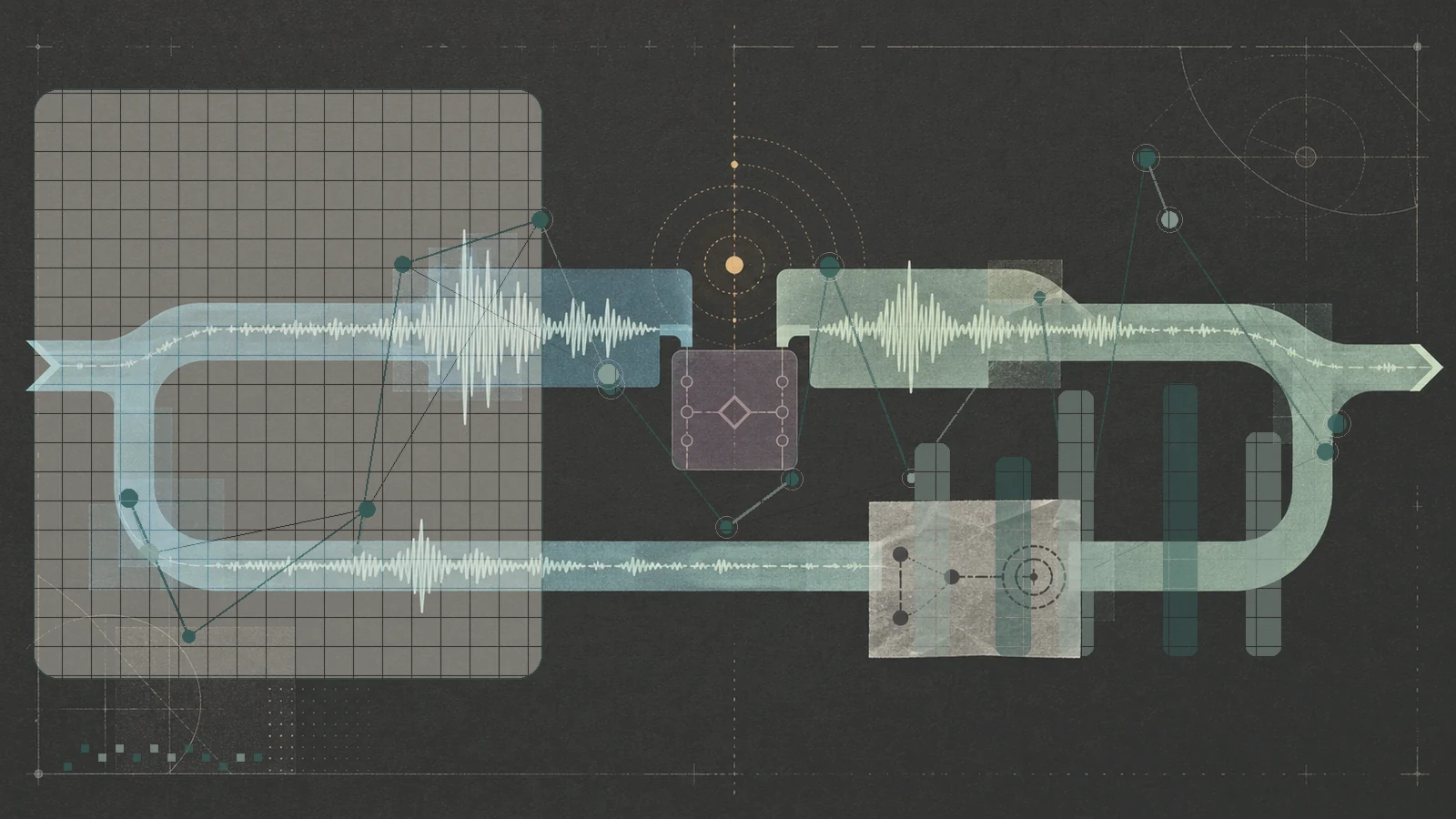
GPT-Realtime-2.1 is a speech-to-speech API model. Its useful unit of evaluation is a completed conversation with the correct tool actions, rather than a transcript that reads well. OpenAI describes improvements to interruption handling, noise and silence, and recognition of spoken letters and numbers. Those are provider claims; benchr has not replayed calls against this model.
The API contract and the conversation state
The exact identifier is gpt-realtime-2.1. Its model card lists text, audio and image input; text and audio output; function calling; and prompt caching. The recorded context window is 128,000 tokens, with a maximum output of 32,000 tokens. These are separate limits, not a guaranteed call duration.
The documented endpoint is the Realtime API. An integration written for Responses or Chat Completions needs a session and event-handling layer; changing its model string is insufficient. Function calling also does not establish a strict JSON-output guarantee. The current card's supported-feature list does not resolve that guarantee, so this revision removes the earlier unsupported assertion that the model explicitly forbids structured outputs. Validate returned arguments and application results independently.
A conversation has several clocks: received audio, recognized user intent, generated audio, audio actually played, and tool execution. If a user interrupts halfway through a spoken answer, the state your application retains should match what they heard. Otherwise the next answer may assume that an instruction or confirmation was delivered when it was never played. Record interruption and cancellation behavior as part of the trace.
Choose the transport before tuning the model
The current connection guide uses WebRTC for browser and mobile clients, WebSocket for server media pipelines, and SIP for telephony. Browser access uses a short-lived client secret created by a trusted server. Keep the ordinary project API key on that server; authenticate the user and constrain the session before issuing client access.
For older beta integrations, the guide documents POST /v1/realtime/client_secrets for client credentials and /v1/realtime/calls for WebRTC negotiation. General-availability requests remove the beta header and use the current session and audio configuration. Review event names too: the guide's current response events include response.output_text.delta, response.output_audio.delta and response.output_audio_transcript.delta. This is documentation-based migration guidance, not an executed integration.
Bound connection time, idle time, concurrent sessions, output generation and tool calls separately. A model's context limit will not prevent an abandoned browser tab from consuming resources. Retry policies must distinguish reconnecting media from repeating a tool action: replaying a payment or support-ticket update is not an acceptable recovery strategy.
Price each modality, including failed conversations
| Modality | Input | Cached input | Output |
|---|---|---|---|
| Text | $4.00 | $0.40 | $24.00 |
| Audio | $32.00 | $0.40 | $64.00 |
| Image | $5.00 | $0.50 | No image output in this contract |
For a hypothetical usage report containing 2,000 audio input tokens, 1,000 audio output tokens and 1,000 text input tokens, with no cache hits or other usage, the token subtotal is $0.132. This value is computed from the shared billing engine during the build. It is not a measured call or a per-minute rate. The Realtime calculator accepts these separate categories and exports the assumptions.
Cached tokens are a subset of input in each modality. Subtract them from ordinary input before charging their cache rate; do not charge the full input twice. benchr does not infer audio tokens from seconds, assume a cache hit, or estimate telephony, tool, storage or backend charges. Incomplete usage remains an incomplete estimate. Count unsuccessful calls and repeated attempts when comparing cost per completed task.
Replay the failures that a voice demo leaves out
- Spelling and correction: replay account identifiers, dates and numbers, then a correction before the response finishes. Check the final stored value, not just the transcript.
- Slow or failed tools: return a timeout, an authorization error and a conflicting result. Check whether the assistant communicates uncertainty and avoids repeating a side effect.
- Interruption and reconnect: interrupt instructions, disconnect mid-turn and resume. Verify what remains in the conversation and whether audio playback catches up incorrectly.
- Approval: require explicit confirmation for a consequential action and test ambiguous speech. A valid function call is not proof of user authorization.
Use the same microphone, network conditions, task set and tool permissions when comparing the mini model. Promote the larger model only where the accepted-task improvement justifies the measured total cost. A chained speech-to-text, text-model and synthesis system can be easier to audit when explicit transcripts or approval gates matter more than conversational continuity. Neither architecture has a universal quality or latency advantage without a matching measurement.
A separate synthesis stage
If your architecture generates text before speech, ElevenLabs is a synthesis option to evaluate. Compare the complete conversation loop with a realtime system; a TTS-only latency claim does not measure the same operation. Read the voice and ElevenLabs reference.
Audio alternatives note added 2026-10-16; this does not reverify the original model record.