 benchr
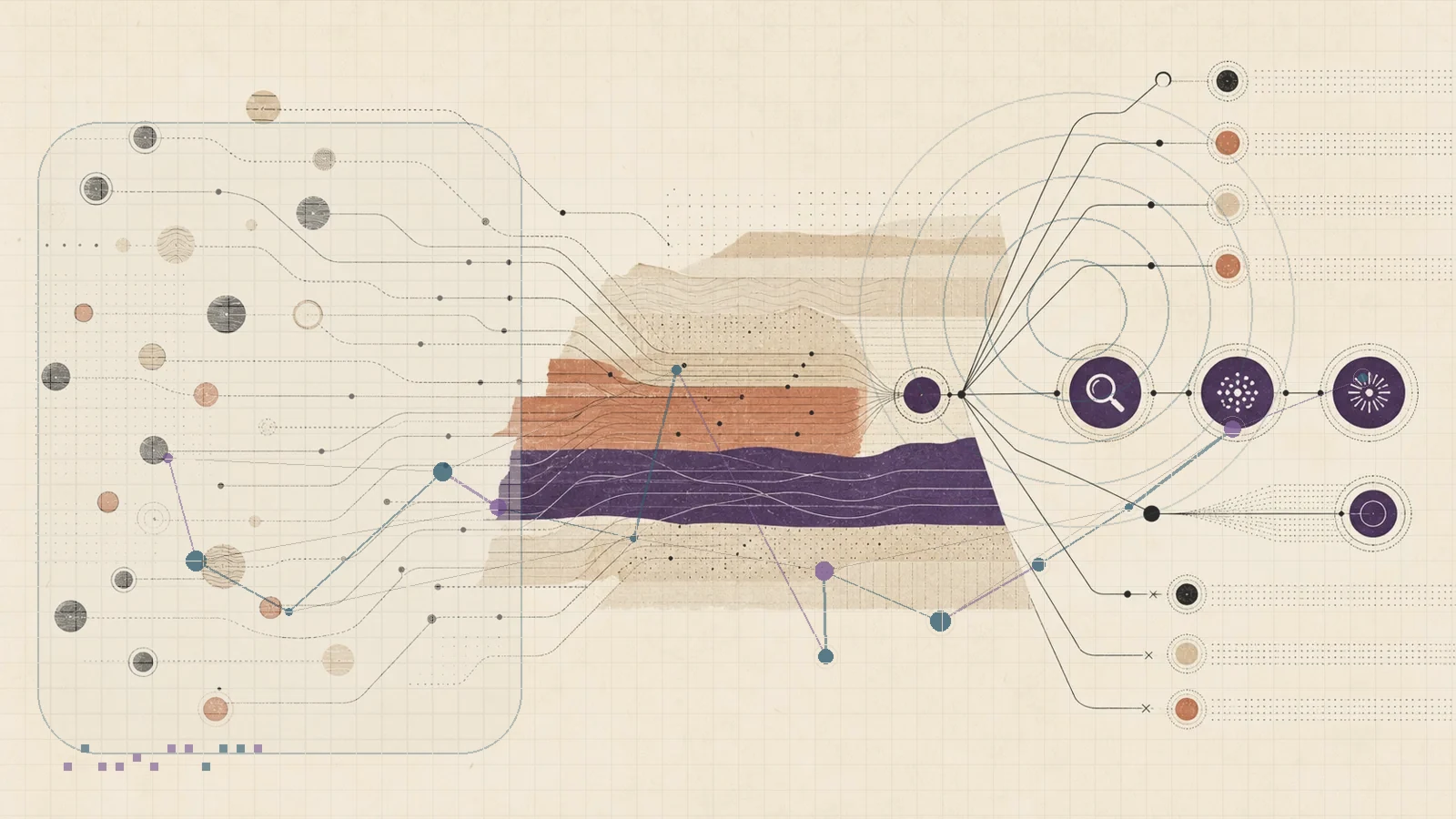
In a supported ChatGPT shopping flow, a request such as "find me a pair of running shoes under sixty bucks, size 10, gray" can surface a participating product and a checkout control. You confirm the size and total before the order is submitted. Tokenization is designed to limit exposure of the underlying card number, but it does not remove merchant, account, or operational risk.
That loop, from a request to a confirmed purchase with fewer manual checkout steps, is what people mean by agentic shopping. Some flows moved beyond demos in the dated launches below, but coverage remains provider-, merchant-, region-, and account-dependent.
One purchase, start to finish
OpenAI announced ChatGPT's Instant Checkout on September 29, 2025. The assistant presents a product from a participating merchant, and the user confirms the purchase. Stripe then issues what it calls a Shared Payment Token, limited to that merchant and cart total. The token lets ChatGPT initiate payment without giving the seller the card number. The merchant remains responsible for the order; OpenAI does not become the retailer.
In its September 29, 2025 announcement, OpenAI said Instant Checkout started with U.S. Etsy sellers and described more than one million Shopify merchants—along with brands including Glossier, SKIMS, Spanx, and Vuori—as planned future coverage. That was a historical launch statement, not confirmation that every named or counted merchant later became available. Check the current ChatGPT and merchant documentation for live eligibility. The announcement also described single-item purchases first, with multi-item carts and more regions on the roadmap, using the open Agentic Commerce Protocol co-developed with Stripe.
Google places the final purchase action with its AI Mode service. In the version shown at I/O on May 20, 2025, users select “track price” and provide a size, color, and target price. When the price falls, they can select “buy for me”; Google adds the item to the retailer's cart and completes checkout with Google Pay. A broader rollout followed on November 13, 2025 with merchants including Wayfair, Chewy, Quince, and select Shopify stores. Google says its Shopping Graph contains more than 50 billion product listings, and that a purchase occurs only after the user confirms the details.
Even in a flow that moves from product search to payment, the user still confirms the transaction. That control becomes more important as shopping agents take on more steps. The same pattern appears in benchr's review of AI agents after eighteen months: useful automation still depends on explicit limits and approval points.
Who's wiring up the checkout
Four assistant providers announced or launched distinct checkout models in the dates below, and two payment networks announced supporting rails. The table is a historical snapshot, not a claim that every flow remains available to every user today.
| Player | What it does | How your card is handled |
|---|---|---|
| OpenAI, Instant Checkout (Sept 29, 2025) | The announcement described U.S. Etsy sellers at launch and Shopify expansion as planned; verify current merchant eligibility. | Stripe Shared Payment Token, scoped to one merchant and cart total |
| Google, AI Mode checkout (I/O May 20, 2025; rollout Nov 13, 2025) | "Track price," then "buy for me"; Google adds to your cart on the retailer's site and pays. | Google Pay, after you confirm the details |
| Amazon, Buy for Me (beta, Apr 8, 2025) | Agent leaves Amazon and checks out on other brands' sites when Amazon doesn't sell the item. | Encrypted name, address and payment details; brand handles fulfillment and returns |
| Perplexity, Buy with Pro (Nov 2024) | One-click buy inside Perplexity for U.S. Pro users; free merchant program, free shipping. | Saved billing once; PayPal and Venmo added via the May 2025 PayPal deal |
| Visa, Intelligent Commerce (Apr 30, 2025) | Opens Visa's network to agent developers. Partners include OpenAI, Anthropic, Microsoft, Perplexity, Stripe. | Tokenized "AI-ready" cards, payment passkeys, spending limits |
| Mastercard, Agent Pay (Apr 29, 2025) | Agentic payments for AI assistants. Partners: Microsoft, IBM, Braintree, Checkout.com. | Mastercard Agentic Tokens built on its Payment Passkeys |
A few things jump out. Perplexity got there first, with Buy with Pro back in November 2024, where U.S. Pro subscribers save their billing once and buy select products without leaving the app. The merchant program is free to join and includes free shipping, and a May 2025 PayPal partnership added PayPal and Venmo as checkout options. It's the tightest model: a confirmed cart, one click, done.
Amazon's Buy for Me has been in beta since April 8, 2025. When a user selects an item that Amazon does not sell, the agent completes checkout on the brand's website using the user's encrypted name, address, and payment details. Amazon says the system runs on Amazon Bedrock with its Nova models and Anthropic's Claude. The brand, not Amazon, handles fulfillment, delivery, returns, and customer service.
Both payment networks moved within a day of each other. Mastercard unveiled Agent Pay on April 29, 2025, with Mastercard Agentic Tokens built on its tokenization and Payment Passkeys, and launch partners Microsoft, IBM, Braintree and Checkout.com. Visa followed on April 30 with Intelligent Commerce, opening its network to agent developers through tokenized "AI-ready" cards, passkeys and spending controls, with OpenAI, Anthropic, Microsoft, Perplexity and Stripe among its partners. The pattern across all of it is the same: tokenize the card, gate the purchase behind a confirmation.
Payment tokenization limits card-number exposure; confirmation and purchase quality remain separate controls.
Payment protections and decision risks
Stripe's Shared Payment Token, Visa's tokens, and Mastercard's Agentic Tokens are designed to limit exposure of the underlying card credentials. Their protections depend on each provider's documented scope and implementation. They do not assess product selection, prevent every duplicate order, settle return responsibility, or protect an agent from prompt injection.
Prompt injection is a central security risk. A shopping agent reads web pages, and a seller or an attacker who compromised a listing can hide text that looks like product copy to a person but functions as an instruction to the agent. Greater autonomy expands that attack surface. The data-exposure questions in benchr's guide to how AI providers handle submitted content also apply here, with payment details added to the risk.
Operational failures include receiving the wrong item or placing a duplicate order. Returns across these services are handled by the merchant or brand rather than the AI company. Google describes confirmation of size, color, and shipping as a control before purchase; its value depends on the information shown and the user's review.
The tension is also commercial. Some retailers publicly objected to Amazon's Buy for Me listing their products without permission. Agentic shopping changes who controls the storefront even when the retailer did not choose to participate. A related shift is already visible in zero-click search, where an AI interface can stand between a business and its customer.
The verdict, for now
Agentic checkout is best suited to low-stakes, well-specified purchases: a known product, a clear size, and an acceptable price. Tokenized payment limits card exposure, and the confirmation step keeps the final decision with the user.
Avoid it when a mistaken purchase would be costly or difficult to reverse, including high-value items and products with narrow return windows. Read every confirmation screen. As agents remember more preferences and act with fewer prompts—a shift covered in benchr's guide to persistent memory—the user's final approval remains the key control.
Frequently asked
How does AI shopping checkout work?
The agent finds a product, you confirm, and it pays with a token that hides your card from the store. In ChatGPT's Instant Checkout, the merchant stays in control and Stripe's Shared Payment Token, scoped to one merchant and cart total, completes the sale without exposing your card. In Google's AI Mode you tap "buy for me" and Google adds the item to your cart on the retailer's site and pays with Google Pay. Amazon's Buy for Me sends its agent out to the brand's own site with your encrypted details.
Is it safe to let an AI agent buy something for me?
Mostly, with caveats. The payment side is built to be safe: Stripe's Shared Payment Token and the new Visa and Mastercard agent tokens are designed so your real card number never reaches the merchant or the agent. The risks are practical, not card theft. An agent can buy the wrong item or duplicate an order, hostile product pages can try prompt injection to trick it, and returns fall to the merchant, not the AI company. Most services also make you confirm before they buy.
Which agentic-checkout launches are documented here?
This page records dated announcements from four providers. OpenAI announced Instant Checkout on September 29, 2025 with U.S. Etsy sellers at launch and described more than one million Shopify merchants as planned future coverage; that statement does not confirm current availability, so check the live product. Google showed AI Mode checkout on May 20, 2025 and announced a broader November 13 rollout with named merchants and select Shopify stores. Amazon's Buy for Me entered beta on April 8, 2025, and Perplexity announced Buy with Pro in November 2024. Mastercard and Visa announced agentic-payment programs in late April 2025.
What happens if the agent buys the wrong thing?
Returns and support fall to the merchant or brand, not the AI company. With Amazon's Buy for Me, the brand handles fulfillment, delivery, returns and customer service. Google says it asks permission and only buys after you confirm the size, color and shipping details, which limits wrong-item buys but doesn't settle the liability question when an agent acts on its own. The confirmation gate is your main protection, so read what's in the cart before you approve it.
Changelog
- July 23, 2026 — Recast the “one million Shopify merchants coming soon” wording as a September 2025 historical announcement and added a requirement to verify current provider and merchant availability.
- May 30, 2026 — Originally published. Launch dates, partners and token mechanics checked against Stripe, Google, Visa, Mastercard and trade-press announcements.
References
- Stripe, "Stripe and OpenAI launch Instant Checkout," stripe.com, accessed May 2026.
- Google, "Agentic checkout for holiday AI shopping," blog.google, accessed May 2026.
- TechCrunch, "Google adds AI-powered shopping features for discovery and easy check-out," techcrunch.com, accessed May 2026.
- Perplexity, "Shop like a Pro," perplexity.ai, accessed May 2026.
- Digital Commerce 360, "Amazon Buy for Me agentic AI shopping tool," digitalcommerce360.com, accessed May 2026.
- PYMNTS, "Visa powers AI shopping agents with Intelligent Commerce payment rails," pymnts.com, accessed May 2026.
- Visa, "Visa Intelligent Commerce," usa.visa.com, accessed May 2026.
- Mastercard, "Mastercard Unveils Agent Pay," mastercard.com, accessed May 2026.